Modeling in R and Tidying Results

linear models and broom

2025-08-09

⚠️ This is not a course in a regression

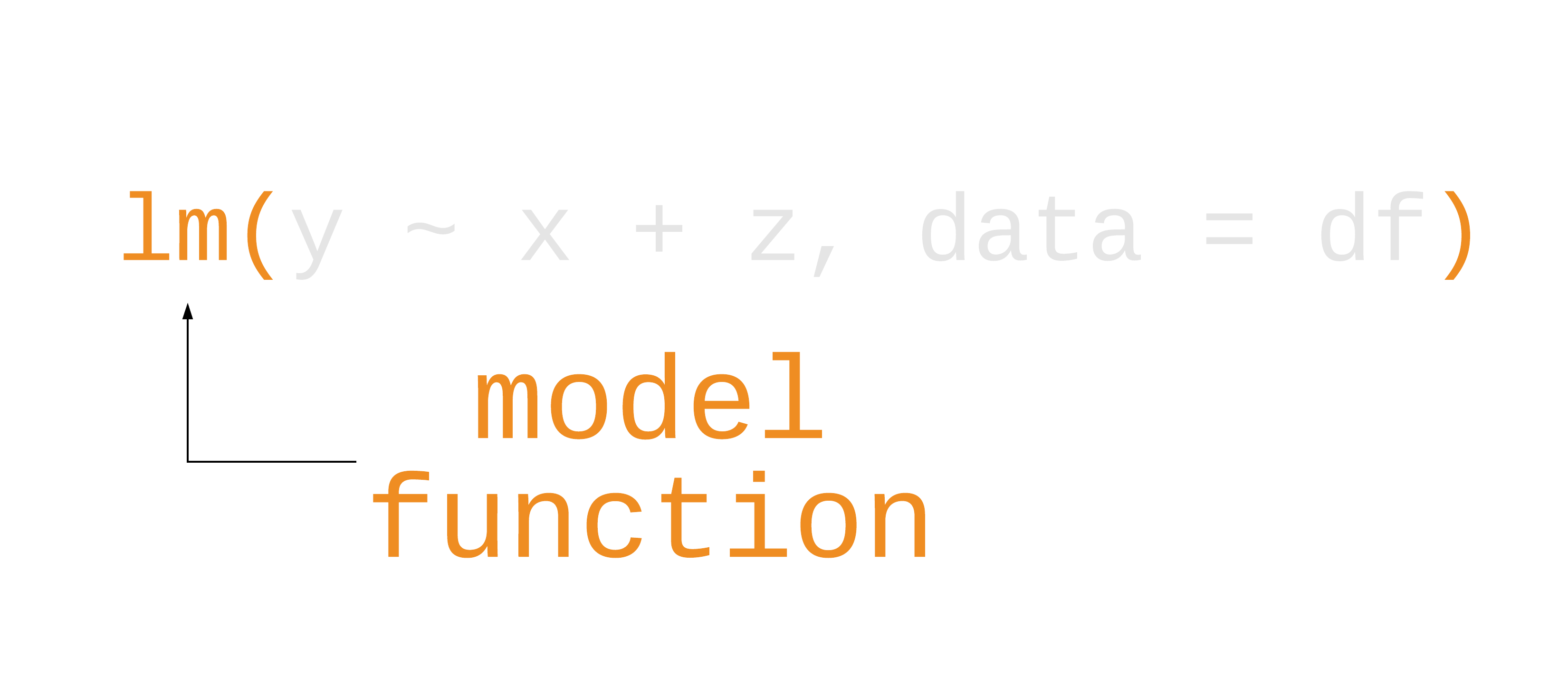
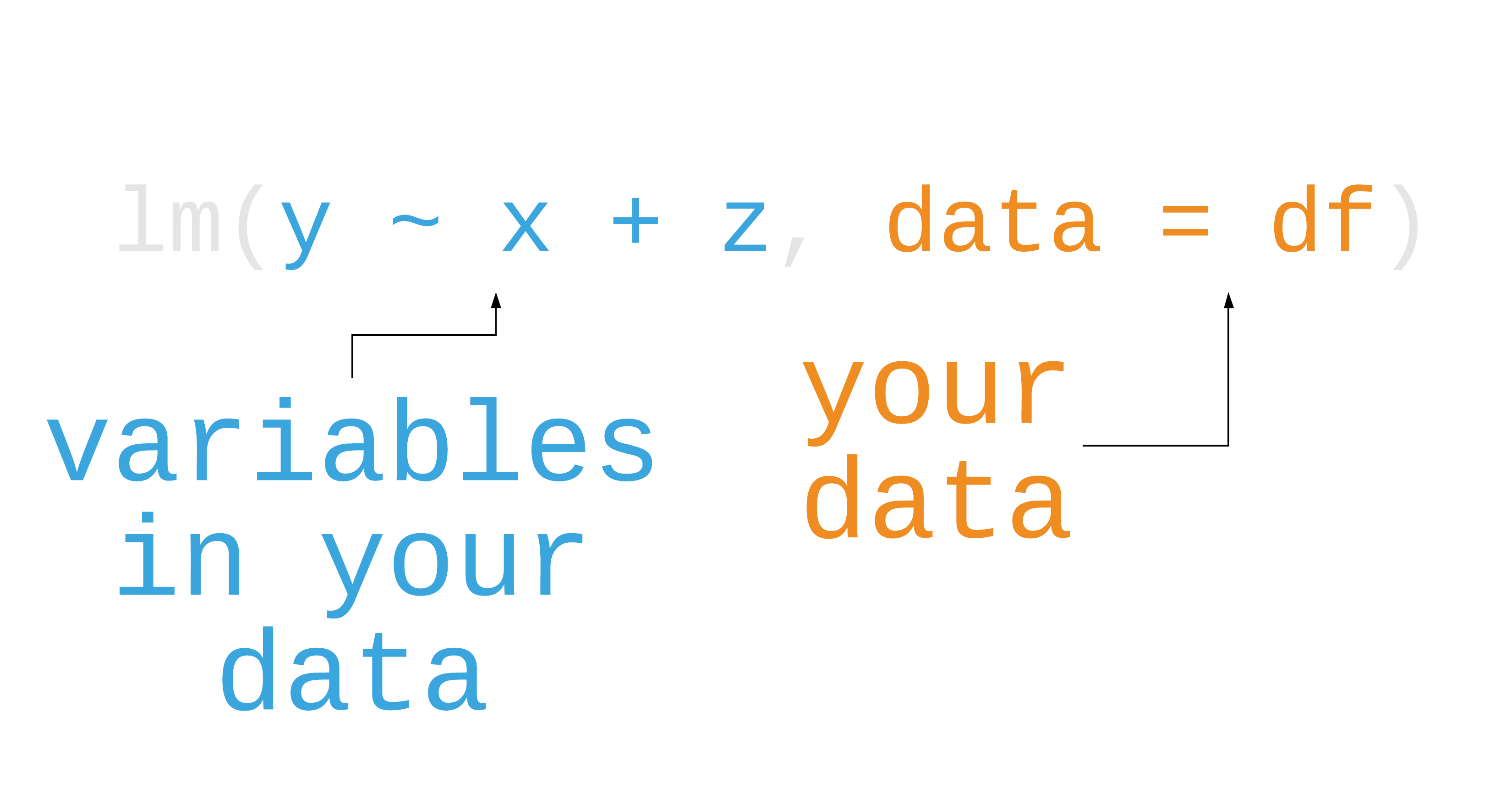
Modeling in R

Modeling in R

Modeling in R
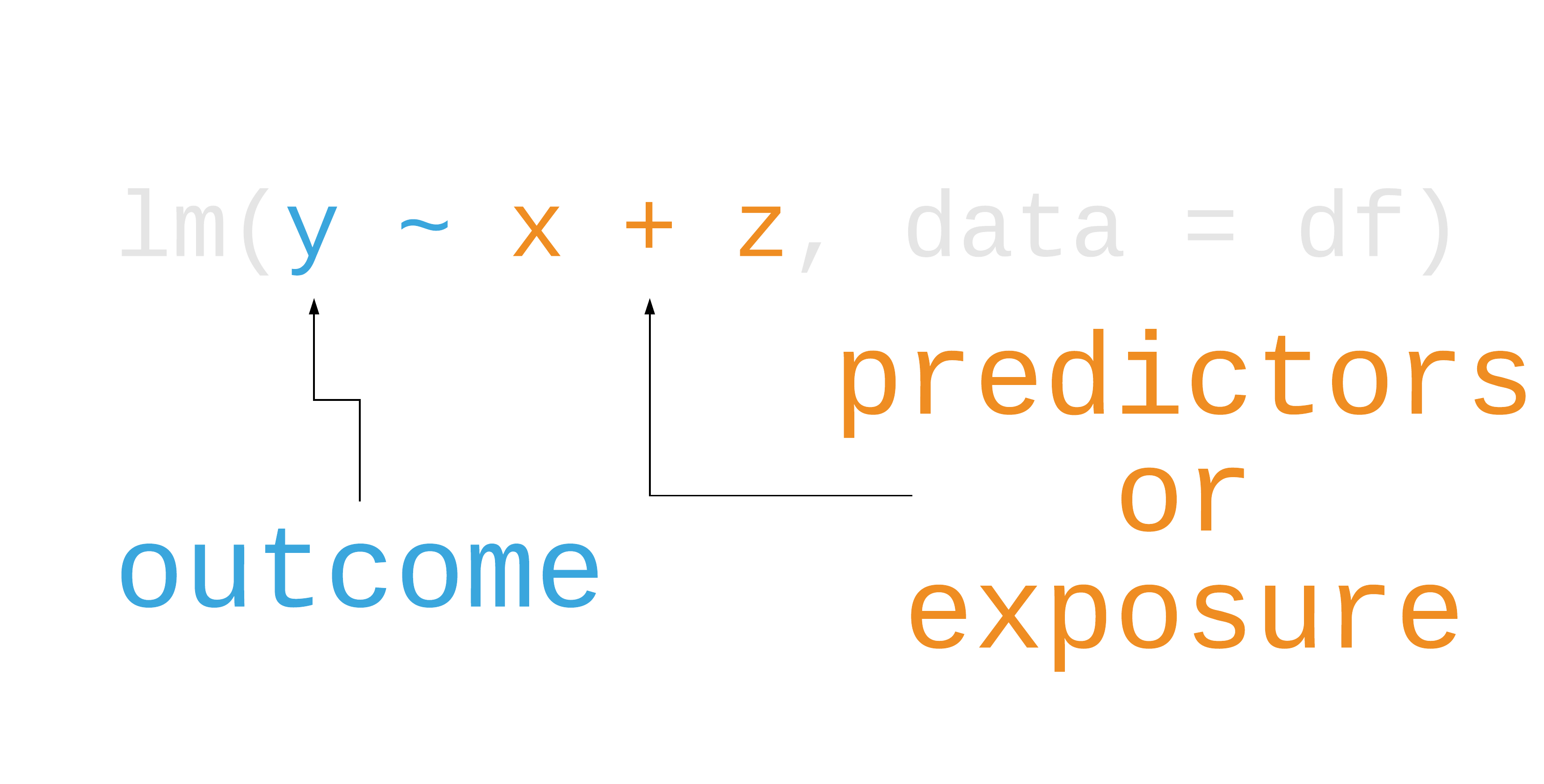
Modeling in R

Modeling in R

lm() = Linear Regression (OLS)

glm() = Generalized Linear Model (default family = Gaussian)

Modeling in R

lm(price ~ carat, data = diamonds)

Call:
lm(formula = price ~ carat, data = diamonds)

Coefficients:
(Intercept)        carat  
      -2256         7756  

Modeling in R

lm(price ~ carat, data = diamonds) |> 
  summary() 

Call:
lm(formula = price ~ carat, data = diamonds)

Residuals:
     Min       1Q   Median       3Q      Max 
-18585.3   -804.8    -18.9    537.4  12731.7 

Coefficients:
            Estimate Std. Error t value Pr(>|t|)    
(Intercept) -2256.36      13.06  -172.8   <2e-16 ***
carat        7756.43      14.07   551.4   <2e-16 ***
---
Signif. codes:  0 '***' 0.001 '**' 0.01 '*' 0.05 '.' 0.1 ' ' 1

Residual standard error: 1549 on 53938 degrees of freedom
Multiple R-squared:  0.8493,    Adjusted R-squared:  0.8493 
F-statistic: 3.041e+05 on 1 and 53938 DF,  p-value: < 2.2e-16

broom: tidy models

tidy()

glance()

augment()

broom: tidy models

tidy() = model coefficients

glance()

augment()

broom: tidy models

tidy()

glance() = model fit

augment()

broom: tidy models

tidy()

glance()

augment() = model predictions

broom: tidy models

tidy()

glance()

augment()

NOT a core member of the tidyverse. Need to load with library(broom)

Modeling in R

library(broom)
lm(price ~ carat, data = diamonds) |> 
  tidy() 
# A tibble: 2 × 5
  term        estimate std.error statistic p.value
  <chr>          <dbl>     <dbl>     <dbl>   <dbl>
1 (Intercept)   -2256.      13.1     -173.       0
2 carat          7756.      14.1      551.       0

Modeling in R

lm(price ~ carat, data = diamonds) |> 
  glance() 
# A tibble: 1 × 12
  r.squared adj.r.squared sigma statistic p.value    df
      <dbl>         <dbl> <dbl>     <dbl>   <dbl> <dbl>
1     0.849         0.849 1549.   304051.       0     1
# ℹ 6 more variables: logLik <dbl>, AIC <dbl>, BIC <dbl>,
#   deviance <dbl>, df.residual <int>, nobs <int>

Modeling in R

lm(price ~ carat, data = diamonds) |> 
  augment() 
# A tibble: 53,940 × 8
   price carat .fitted .resid      .hat .sigma     .cooksd
   <int> <dbl>   <dbl>  <dbl>     <dbl>  <dbl>       <dbl>
 1   326  0.23 -472.     798. 0.0000452  1549. 0.00000600 
 2   326  0.21 -628.     954. 0.0000471  1549. 0.00000892 
 3   327  0.23 -472.     799. 0.0000452  1549. 0.00000602 
 4   334  0.29   -7.00   341. 0.0000398  1549. 0.000000966
 5   335  0.31  148.     187. 0.0000382  1549. 0.000000278
 6   336  0.24 -395.     731. 0.0000442  1549. 0.00000493 
 7   336  0.24 -395.     731. 0.0000442  1549. 0.00000493 
 8   337  0.26 -240.     577. 0.0000424  1549. 0.00000294 
 9   337  0.22 -550.     887. 0.0000461  1549. 0.00000756 
10   338  0.23 -472.     810. 0.0000452  1549. 0.00000618 
# ℹ 53,930 more rows
# ℹ 1 more variable: .std.resid <dbl>

Try it yourself

Work your way through the exercises. If anything in particular is giving you trouble, we’ll work through it together.

Resources

Tidy Models with R: a deeper dive into tidymodels. Free online. Focused on machine learning and prediction.

Causal Inference in R: Causal modeling in R. Free online.

UCLA IDRE: Useful resources on modeling in R and other languages